Traditional broadcast spraying blankets entire yards with indiscriminate chemicals, frequently harming beneficial pollinators without resolving standing water reservoirs. Targeted mosquito yard suppression uses an…
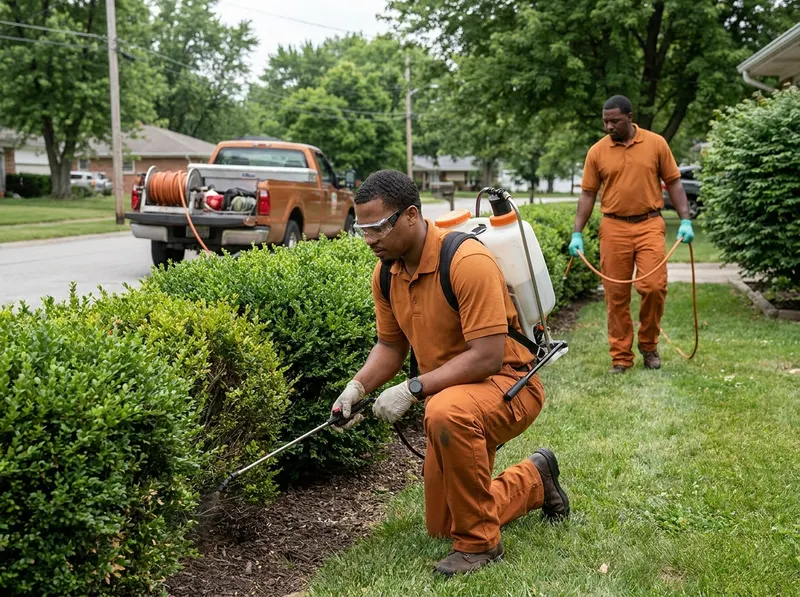
Traditional broadcast spraying blankets entire yards with indiscriminate chemicals, frequently harming beneficial pollinators without resolving standing water reservoirs. Targeted mosquito yard suppression uses an integrated diagnostic approach that locates specific breeding habitats—such as saturated swales near Sarah T. Bolton Park or dense ornamental shrubbery along the Main Street Historic Corridor—to apply biological larvicides and residual barrier applications directly to mosquito harborages.
Low-lying residential properties throughout South Grove, Churchman Meadows, and the Albany Street District often experience rapid mosquito proliferation after seasonal rainfall fills storm basins and shaded soil depressions. Technicians systematically map shade canopies, ground covers, and property boundaries near Don Challis Park and Bellemeade, applying specialized barrier treatments to the undersides of broadleaf foliage where adult mosquitoes rest during daylight hours.
While single over-the-counter fogging canisters provide only temporary relief lasting a few hours, clinical yard suppression establishes residual barriers that remain active for 21 to 30 days while leaving lawns safe for family pets once dry. This structured remediation prevents the continuous expense of retail repellents while protecting household perimeters from vector-borne disease risks throughout Marion County's humid summer months.
Every job gets a firm, written price after a free on-site visit.
Tell us about your targeted mosquito yard suppression job in Beech Grove and we'll send a clear, written quote — usually the same day.
 Ulvori Pest Management Group