Termite management requires targeted structural protection rather than indiscriminate surface spraying. Eastern subterranean termites construct earthen shelter tubes along foundation masonry to reach framing timbers,…
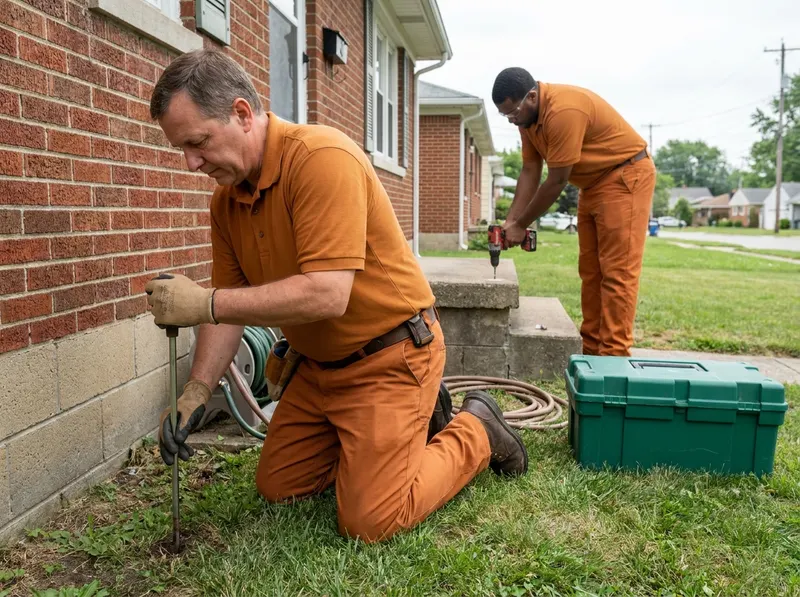
Termite management requires targeted structural protection rather than indiscriminate surface spraying. Eastern subterranean termites construct earthen shelter tubes along foundation masonry to reach framing timbers, sill plates, and subfloors. Over-the-counter insecticides act merely as topical repellents, scattering foraging insects into deeper wall cavities while leaving the reproductive subterranean nest unharmed. A clinical remediation protocol introduces an undetectable liquid barrier into the soil beneath foundation footings. Worker termites pass through the zone undisturbed, transferring non-repellent active ingredients back to the central colony through grooming and feeding cycles to dismantle the population at its source.
Properties across Beech Grove face distinct subterranean pressures based on neighborhood age and local drainage profiles. Historic crawlspace foundations along the Main Street Historic Corridor and Albany Street District frequently possess wood-to-soil contact points that facilitate exploratory mud tubes. In low-lying parcels near Sarah T. Bolton Park and Churchman Meadows, damp clay soil retains elevated moisture levels that attract subterranean colonies toward concrete slab joints and basement cold joints. Methodical remediation incorporates precise trenching and sub-slab injection calibrated to local soil composition, establishing long-term structural defense for homes in South Grove, Bellemeade, and Park Grove.
Every job gets a firm, written price after a free on-site visit.
Tell us about your subterranean termite diagnostic and remediation job in Beech Grove and we'll send a clear, written quote — usually the same day.
 Ulvori Pest Management Group