Property owners seeking a reliable pest control service in Beech Grove benefit from systematic diagnostics that locate nesting harborage before applying targeted interventions. Domestic pest management prioritizes physical perimeter sealing alongside low-impact interior controls to restore sanitary safety without continuous chemical saturation.
No forms — call now for a fast, no-pressure quote.
📞 Call (463) 271-7311
Pest control service in Beech Grove is a structured sanitary remediation and structural exclusion process designed to eliminate target insect and rodent populations while securing building envelopes against re-entry.
Every service reflects the same meticulous attention to detail — whether it's a single job or a larger pest control service project across Beech Grove.
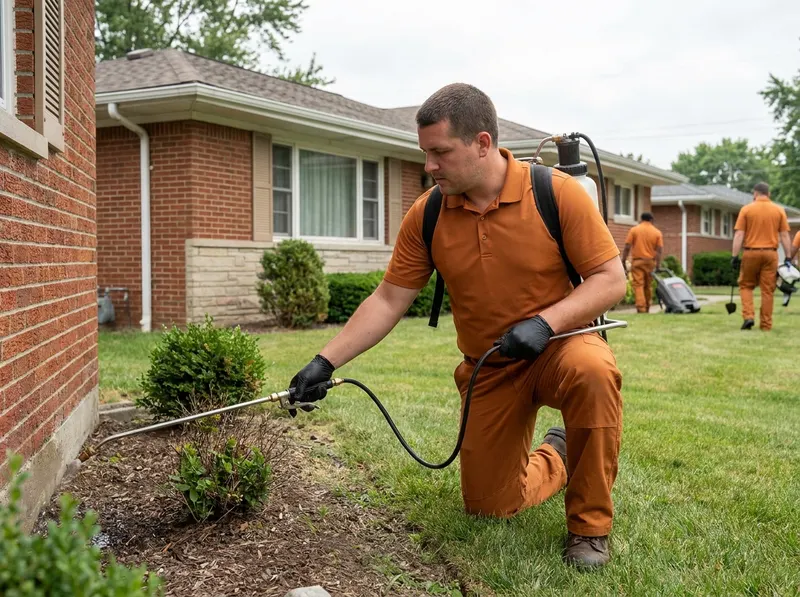
Creates a continuous protective chemical and physical band around foundation walls, window wells, subfloor vents, and utility entries to stop crawling insects before they breach living spaces. Technicians apply micro-encapsulated formulations three feet up the exterior wall and three feet out across the soil and aggregate zone, forming an invisible shield that adheres to masonry, brick, and vinyl siding. This exterior perimeter treatment targets moisture-seeking pests such as odorous house ants, field crickets, centipedes, sowbugs, and wolf spiders that migrate toward indoor warmth during weather fluctuations. The treatment is weather-resistant, maintaining structural integrity through spring rainfall and high-humidity summer conditions without leaching into garden beds or non-target turf zones. By reinforcing the perimeter every quarter, interior spaces remain completely protected without requiring routine indoor chemical applications.
View details →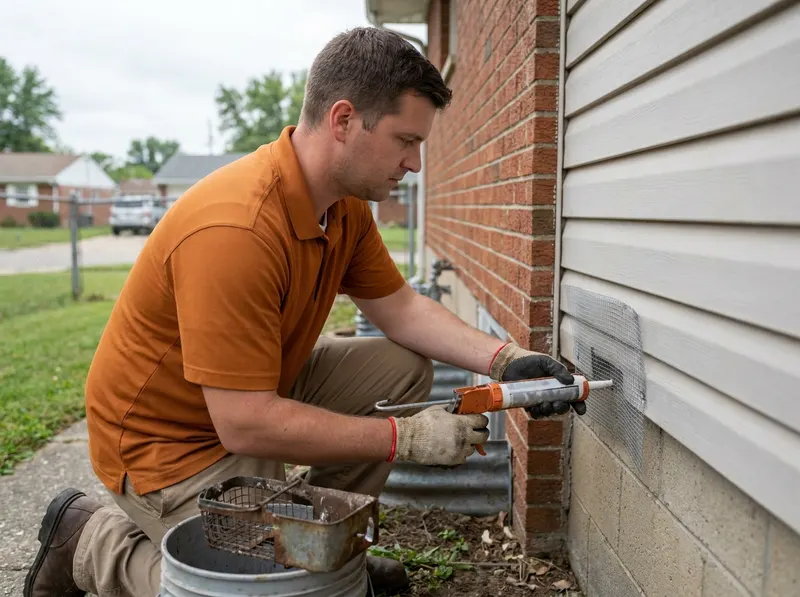
Combines precise mechanical sealing of gaps larger than one-quarter inch using heavy-gauge galvanized steel mesh, copper mesh, and elastomeric sealants with systematic interior population extraction protocols. Technicians perform an exhaustive exterior envelope audit, identifying unsealed pipe chases, deteriorated crawlspace access hatches, AC line penetrations, and damaged garage door weatherstripping where Norway rats and field mice gain entry. Following structural sealing, interior snap traps and multi-catch containment units are deployed along identified travel runways in basements, attics, and drop-ceiling voids to eliminate stranded populations without utilizing loose toxic rodenticides that risk indoor pet exposure or secondary carcass odor issues. Monitoring and mechanical retrieval continue until structural zero activity is verified.
View details →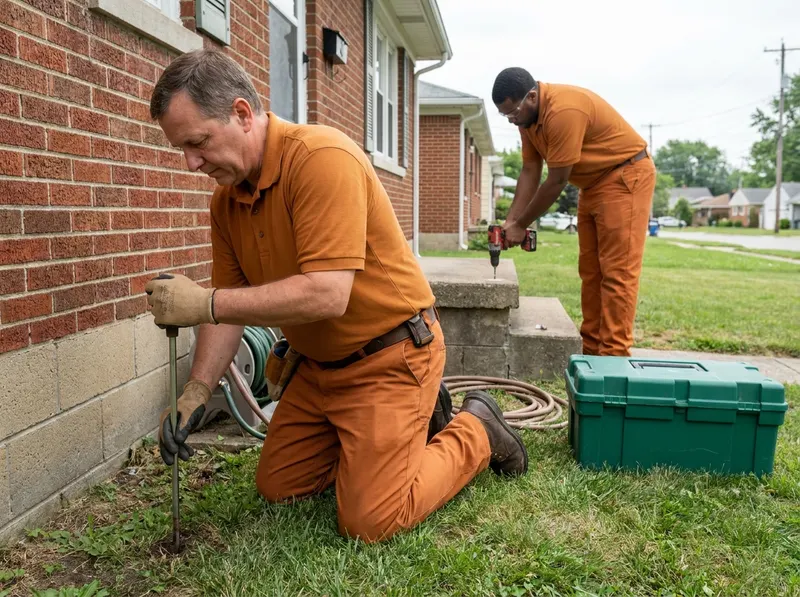
Deploys non-disruptive liquid footer trenching treatments and in-ground bait monitoring stations to intercept wood-destroying subterranean termite colonies within local clay soils. Technicians excavate narrow perimeter trenches directly adjacent to exterior foundation footers and stem walls, treating the soil backfill with slow-acting, non-repellent termiticides that foraging worker termites carry back to the central subterranean queen. For finished concrete patios, garage slabs, and brick entryways, specialized sub-slab injection equipment delivers exact dosage barriers directly into aggregate sub-bases without causing structural masonry damage. Regular inspection of timber sills, mudsills, joist pockets, and moisture-prone crawlspace framing ensures that early signs of shelter mud tubing or structural hollows are halted before load-bearing integrity is compromised.
View details →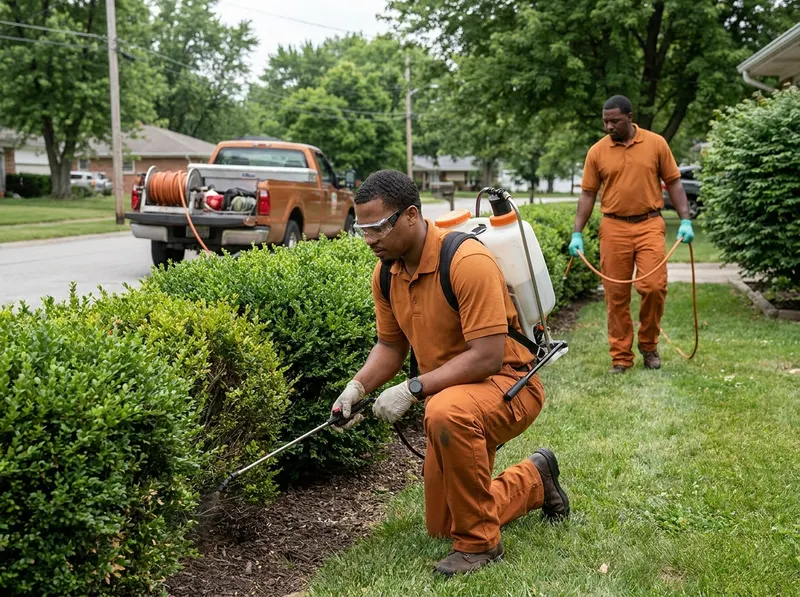
Focuses foliar surface treatments and micro-droplet mist applications directly on daytime resting foliage, shaded soffits, dense brush borders, and low-drainage turf zones to break reproduction cycles during peak summer months. Technicians utilize botanical and pyrethroid-based barrier compounds that bond securely to the undersides of broadleaf shrubs, ornamental plantings, and tree canopies where adult mosquitoes harbor during hot midday hours. Concurrently, standing water zones such as drainage swales, catch basins, and unpaved driveway ditches are treated with biological larvicides containing Bacillus thuringiensis israelensis (BTI), which specifically neutralize mosquito larvae before adult emergence without causing harm to beneficial pollinators, aquatic organisms, or domestic pets.
View details →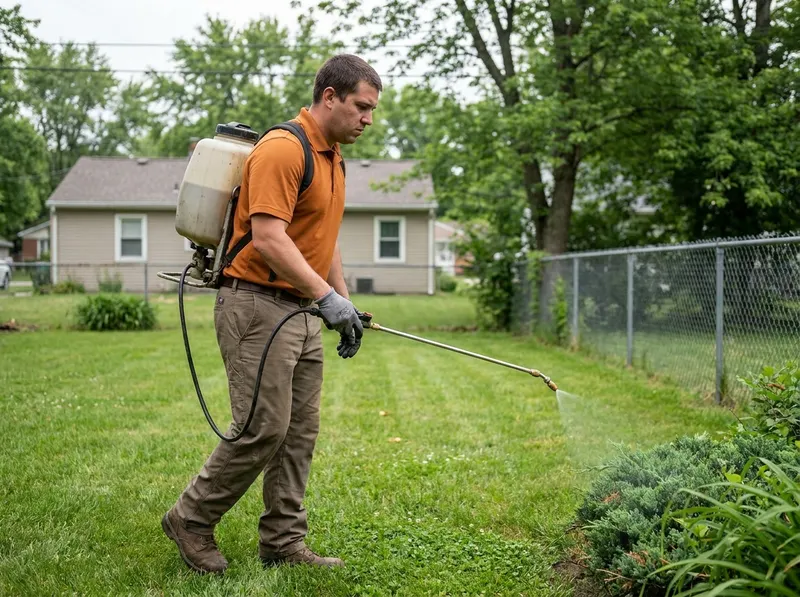
Applies targeted micro-granular and liquid residual controls along property borders, high-grass perimeters, shaded perimeter fence lines, and outdoor pet runs to eliminate parasitic vectors. These applications target deer ticks, American dog ticks, and cat fleas at every life stage, neutralizing adults, nymphs, and emerging larvae within ground litter and thatch layers. The protocol establishes a clean transition buffer between unmanaged wooded corridors and manicured residential turf, preventing dangerous tick attachments and flea transport into household carpet fibers and pet bedding. Materials utilized are photostable, remaining active against heavy outdoor foot traffic and UV degradation while neutralizing parasites upon direct contact.
View details →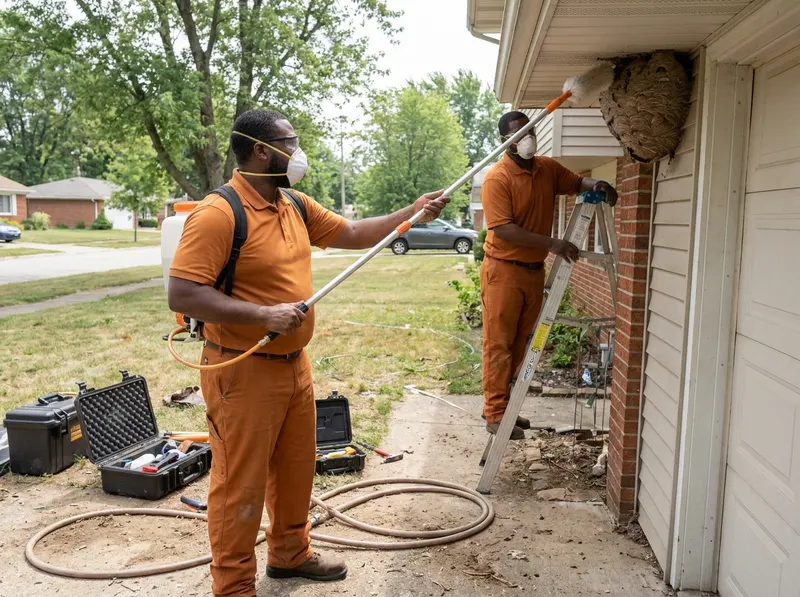
Safely removes bald-faced hornets, paper wasps, mud daubers, and subterranean yellowjacket colonies from exterior soffits, porch overhangs, attic vents, and outdoor recreational structures. Technicians utilize targeted pressurized aerosol injections and specialized extension lances to reach high structural peaks and deep wall voids without requiring ladder repositioning that could agitate territorial defensive colonies. Underground yellowjacket cavities in flowerbeds or lawn contours are treated with fast-acting, non-repellent dust formulations that collapse the entire subterranean hive overnight. Following complete nest deactivation, technicians physically scrape down paper combs, treat attachment anchor points with deterrent residues, and seal entry voids to prevent adjacent scout queens from re-nesting in identical micro-locations.
View details →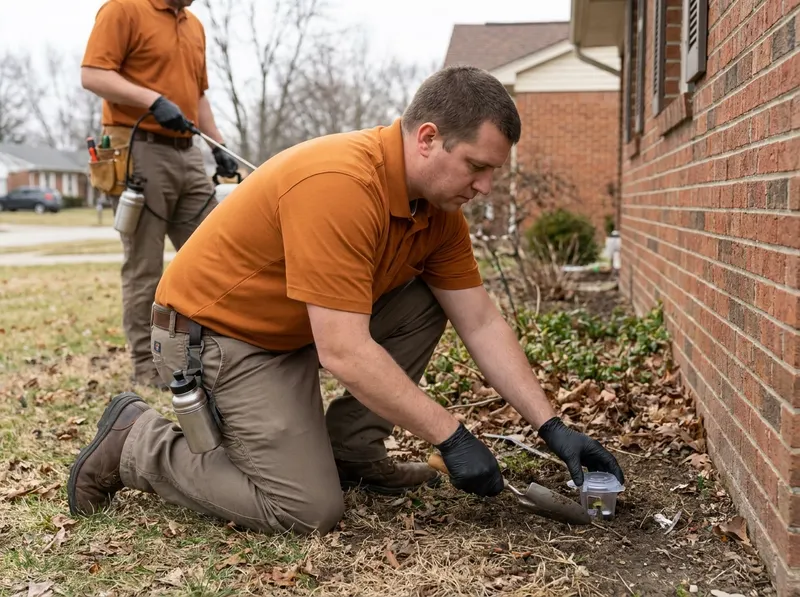
Targets satellite nests and primary parent colonies of odorous house ants, acrobat ants, pavement ants, and carpenter ants using slow-acting non-repellent transfer baits and specialized silica dusts. Rather than spraying repelling over-the-counter insecticides that trigger colony budding and split nests into multiple indoor rooms, technicians place high-attractant carbohydrate and protein bait matrices along identified foraging pheromone trails inside wall voids, beneath baseboards, and around plumbing access points. Foraging worker ants ingest the toxicant and transport it directly to the reproductive queen and juvenile brood via trophallaxis, leading to systematic colony collapse within seven to fourteen days across both interior and exterior perimeter harborage sites.
View details →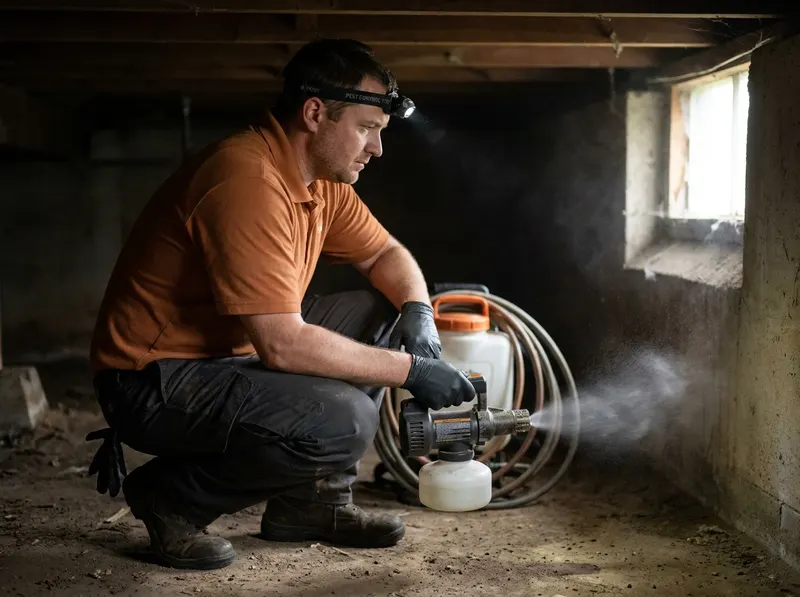
Remediates biological contamination from localized rodent, bat, and insect harborage while installing durable subfloor moisture barriers to eliminate the environmental conditions that attract recurring infestations. Technicians physically extract soiled insulation batts, vacuum biological droppings utilizing HEPA-filtered negative air equipment, and apply broad-spectrum anti-microbial enzyme treatments to neutralize dangerous pheromone signatures, mold spores, and airborne allergens. Subfloor penetrations, rim joists, and top plates are systematically sealed with expanding polyurethane foam and rigid backer board. Reinforced 12-mil to 20-mil vapor retarders are installed across exposed crawlspace earth floors, lowering relative humidity levels and eliminating the damp microclimates required by wood-boring beetles and subterranean termites.
View details →Pest control service in Beech Grove is a structured sanitary remediation and structural exclusion process designed to eliminate target insect and rodent populations while securing building envelopes against re-entry.
You get a firm, itemized quote for your pest control service before any work begins — no surprises, no pressure.
Careful prep, tidy work, and a full cleanup when we are done. We treat your home and belongings like our own.
The same trusted, background-checked team from the first call to the final check.
Choosing the appropriate remediation approach requires matching the biology of the target pest to the physical layout of your structure. If you want targeted eradication of immediate indoor invaders like carpenter ants or German cockroaches, choose a single-event corrective flush; if you want continuous seasonal protection against perimeter pests like subterranean termites, spiders, and odorous house ants, choose a recurring scheduled barrier program. The trade-off is higher upfront focus on interior harborage versus sustained outer perimeter defense that prevents recurring entry cycles before insects cross the threshold. If you want structural rodent removal, choose physical crawlspace and attic exclusion over broadcast bait stations; exclusion seals the building envelope permanently with galvanized hardware cloth and metal flashing, whereas standalone baiting manages exterior population volume but leaves entry pathways vulnerable to incoming winter migrations. For exterior property management, dedicated misting and yard treatments fit high-vegetation parcels near Sarah T. Bolton Park and Don Challis Park, whereas focused granular perimeter bands fit tightly spaced lots along the Main Street Historic Corridor and Albany Street District. Choosing non-chemical mechanical exclusion costs more in initial labor than chemical treatments, but eliminates ongoing toxin exposure for indoor pets and prevents structural insulation fouling over time. When dealing with wood-destroying organisms, liquid perimeter trenching provides an uninterrupted chemical barrier through dense Indiana clay, whereas non-invasive bait monitoring stations offer discreet tracking with minimal soil disruption at the trade-off of taking several molting cycles to achieve complete colony elimination. For attic wildlife and bat intrusion, one-way exit valves allow humane self-evacuation while exclusion repairs are completed, whereas immediate physical trapping fits isolated raccoon or opossum entry points where animal containment is mandatory. Balancing perimeter defense with targeted interior extraction ensures that high-activity living areas remain clean and toxin-free while structural boundaries remain impervious to environmental pest pressures throughout the year.
Every project gets a firm, written price after a free on-site visit. Ranges below for orientation.
Tell us about your pest control service job and we'll send a clear, written quote — usually the same day. Or just call and talk to a real Beech Grove pro.
(463) 271-7311
Beech Grove properties experience distinct pest patterns driven by local infrastructure, historical architecture, and regional hydrography across Marion County. The active industrial rail corridors running through the Beech Grove Amtrak Heavy Maintenance Facility create expansive gravel railbeds and heavy transit corridors that serve as primary travel highways and undisturbed nesting zones for Norway rats and field mice. As autumn temperatures drop, these rodent populations migrate outward into adjacent residential neighborhoods like the Main Street Historic Corridor, Hartman, and South Grove, seeking shelter in older stone, block, and brick foundations that often feature unsealed utility chases and deteriorated mortar joints. Along the low-lying drainage contours of Lick Creek, slow-moving runoff and dense riparian tree canopies create persistent high-humidity microclimates. Properties adjacent to Sarah T. Bolton Park, Don Challis Park, and Hartman Park face heavy seasonal mosquito swarms and aggressive tick activity throughout early summer, requiring structured foliar barrier applications to suppress larval development. Furthermore, the prevalence of mature hardwood trees and historic timber framing in neighborhoods like Park Grove, Churchman Meadows, and the Albany Street District increases the frequency of carpenter ant nesting and subterranean termite foraging through dense, moisture-retaining Indiana clay soils. Addressing these localized environmental pressures requires customized, site-specific exclusion barriers and perimeter diagnostics calibrated specifically to Beech Grove soil conditions and structural architecture.
Free estimates for Beech Grove & the surrounding area.
 Ulvori Pest Management Group